Creatine for Brain Health and Cognitive Longevity
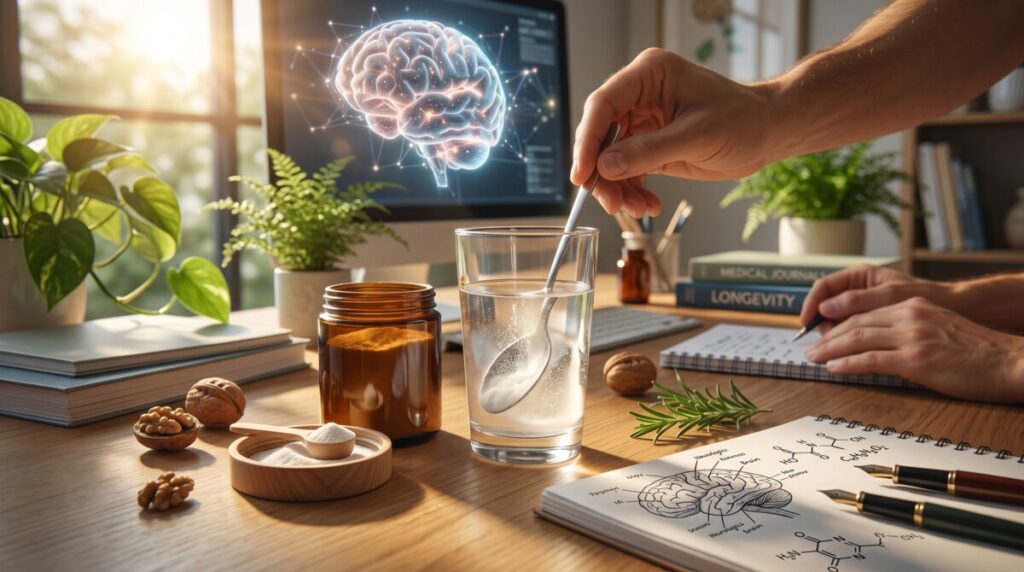
Athletes have long praised creatine for muscular performance, but modern researchers now highlight its remarkable impact on the human brain [Rae et al., 2003]. The brain demands continuous fuel to process complex thoughts, consuming one-fifth of the body’s total metabolic energy every day [Avgerinos et al., 2018]. When intense mental tasks deplete cellular reserves, brain cells require immediate energy restoration to maintain peak performance and focus. Modern clinical studies confirm that elevating cerebral creatine stores strengthens mental sharpness, especially during times of fatigue or stress [Roschel et al., 2021]. Exploring this essential nutritional compound reveals a practical and accessible method to protect cognitive clarity and support lifelong brain health.
https://2d745okbr44ucq6-68yf7er43r.hop.clickbank.net
Key Takeaways
Cellular Energy Restoration: Creatine monohydrate replenishes depleted brain energy stores during high-demand mental challenges.
Working Memory Support: Regular supplementation enhances short-term memory recall and task accuracy under stressful or fatigued conditions.
Long-Term Neuroprotection: Sustaining adequate brain fuel levels helps safeguard neural pathways against age-related metabolic decline.
Boosting Brain Cellular Energy to Support Daily Working Memory
The brain depends on a steady supply of cellular fuel to manage rapid thinking and retain complex information [Rae et al., 2003]. When cognitive stress drains adenosine triphosphate stores, phosphocreatine transfers a phosphate group to instantly recharge cellular energy reserves [Avgerinos et al., 2018]. Clinical trials show that this rapid bioenergetic support leads to measurable gains in working memory and executive reasoning speed. For example, sleep-deprived individuals who take creatine retain significantly higher task accuracy and verbal recall than non-users [Roschel et al., 2021]. Supplying the brain with this natural metabolic fuel keeps vital thinking pathways resilient under demanding mental pressure.
https://e4715kxzoazsnm1l-3qcwh9zbo.hop.clickbank.net
Examining Absorption Limits Across the Human Blood-Brain Barrier
Some clinical experts urge patience because the human brain absorbs oral creatine much more slowly than skeletal muscle tissue [Dolan et al., 2019]. Muscle fibers readily absorb standard loading doses, but the blood-brain barrier tightly regulates how much creatine reaches neural tissues. In addition, baseline dietary choices produce noticeable differences in individual responses, with strict vegetarians often achieving the most pronounced benefits. Minor stomach upset can also occur if people take excessively high doses without drinking sufficient amounts of clean water. For these reasons, researchers emphasize that daily consistency matters far more than fast loading phases when targeting mental performance.
Developing Targeted Neuroprotective Therapies for Healthy Cognitive Aging
Modern medical laboratories now study creatine as a promising therapeutic tool against age-related neurological and metabolic decline [Forbes et al., 2022]. Aging brain cells frequently experience decreased mitochondrial efficiency, which leaves delicate neural networks vulnerable to cellular damage and oxidative stress. Long-term health trials suggest that maintaining youthful energetic stores helps preserve white matter integrity and slows mental fatigue over time. Emerging studies also investigate whether daily supplementation can protect brain tissue from the physical trauma of concussions and sports impacts. These exciting clinical discoveries indicate that cellular energy defense will play a central role in preventative cognitive care.
Conclusion
A growing body of modern science proves that creatine serves as an indispensable energy shield for the human brain [Forbes et al., 2022]. Consistent daily intake raises vital cerebral energy reserves, enhancing working memory and building long-term mental stamina [Avgerinos et al., 2018]. While individual results depend partly on personal baseline diets, this nutritional supplement remains one of the safest cognitive tools available today. Future health strategies will undoubtedly pair brain-targeted nutrition with regular exercise to defend against cognitive decline. Prioritizing daily cellular energy provides a reliable pathway toward sustained mental focus, sharp recall, and lasting cognitive longevity.
https://holisticwellnesswave.com/index.php/2026/02/24/how-wellness-gatherings-are-transforming-social-spaces/
https://www.ncbi.nlm.nih.gov/
Frequently Asked Questions
How does creatine improve cognitive function throughout the day?
Creatine rapidly donates a phosphate molecule to regenerate spent adenosine triphosphate inside hard-working brain cells [Rae et al., 2003]. This rapid recharging process provides neurons with immediate cellular energy during intense concentration, complex problem-solving, and sleep deprivation. As a result, the brain maintains high processing accuracy without succumbing to rapid mental fatigue.
https://e9e03cy4ld7pno993b1303ez9v.hop.clickbank.net
Do vegetarians and vegans experience greater brain benefits from creatine?
Yes, plant-based eaters typically experience more dramatic cognitive improvements because their diets lack natural animal sources of creatine [Avgerinos et al., 2018]. Since vegetables, grains, and fruits contain no creatine, baseline brain reserves are often lower in vegetarians than in red meat eaters. Starting a daily creatine supplement allows plant-based individuals to achieve significant increases in short-term memory and mental clarity.
How much creatine should an adult take to support long-term brain health?
Most neurocognitive studies recommend taking three to five grams of standard creatine monohydrate per day on a consistent schedule [Forbes et al., 2022]. Because the blood-brain barrier transports creatine slowly, high-dose loading phases are largely unnecessary for cognitive support. Taking a steady daily dose for four to six weeks safely and effectively builds optimal cerebral energy reserves.