Walking Yoga: Blending Mindful Breathwork & Low-Impact Flow
I have frequently observed how profound wellness shifts emerge from integrating ancient wisdom with basic functions. Many people view daily walking merely as a tedious means of mandatory physical transit. Similarly, most individuals mistakenly confine traditional yoga practices strictly to a stationary rubber mat. This article introduces you to the transformative and highly disciplined practice of Walking Yoga. This technique elevates a simple stroll into rigorous exercise for the lungs and nervous system.
You will quickly discover how intentionally synchronizing your gait with breath alters your stress response. We will explore the specific breathing patterns necessary for this fundamental physiological recalibration. By the end of this comprehensive guide, you will master these powerful restorative techniques. You will be fully equipped to turn every sidewalk into a sanctuary for cognitive restoration. My goal is to help you achieve lasting physical stamina through intentional, mindful movement.
affiliate link
Key Takeaways
Active Equilibrium: Walking yoga builds functional cardiovascular endurance while achieving traditional meditation states simultaneously.
Neurological Regulation: Focusing on rhythmic breath ratios directly shifts your autonomic nervous system toward deep relaxation.
Accessible Sophistication: This low-impact moving meditation requires absolutely no specialized equipment for maintaining optimal mental performance.
The Fundamentals of Rhythmic Breathwork in Walking Yoga
Readers must understand that walking yoga is defined by internal states, not external postures. The core mechanism involves utilizing Pranayama, which is the ancient yogic science of breath control. Practitioners use this breath control to dictate the precise pace and intensity of physical movement. The breath acts as a metronome, ensuring every muscular contraction receives deliberate oxygen intake. This specific method prevents the shallow breathing often associated with modern sedentary lifestyles today. Mastering these rhythmic breathing fundamentals creates a feedback loop that rapidly stabilizes the human heart.
affiliate link
Comparing Static Yoga vs. Low-Impact Mindful Movement
Many question whether a walking practice provides benefits equal to traditional studio yoga sessions. Static poses excel at building isometric strength and increasing localized muscular flexibility efficiently. However, moving meditation offers a unique proprioceptive challenge that actively engages balance in real-time. Critics occasionally argue that routine walking lacks the complex muscular engagement of an Asana practice. Yet, researchers suggest rhythmic movement induces deeper psychological flow states [Source: Journal of Clinical Medicine]. These modalities should be viewed as highly complementary tools within a comprehensive wellness arsenal.
Therapeutic Benefits of Blending Breath with Locomotion
Blending intentional respiration with a natural walking stride unlocks a massive cascade of physiological benefits. This specific practice extends far beyond simple calorie burning or basic cardiovascular maintenance. Walking yoga is exceptionally effective at reducing cortisol, the hormone associated with chronic psychological stress. Studies show mindful nature walks lower blood pressure better than sedentary meditation [Source: National Institutes of Health]. Furthermore, this low-impact activity lubricates joints and strengthens stabilizer muscles without the jarring impact of running. Practitioners essentially perform a systemic physiological reset that enhances physical longevity and emotional resilience simultaneously.
affiliate link
How to Synchronize Steps with Inhalations and Exhalations
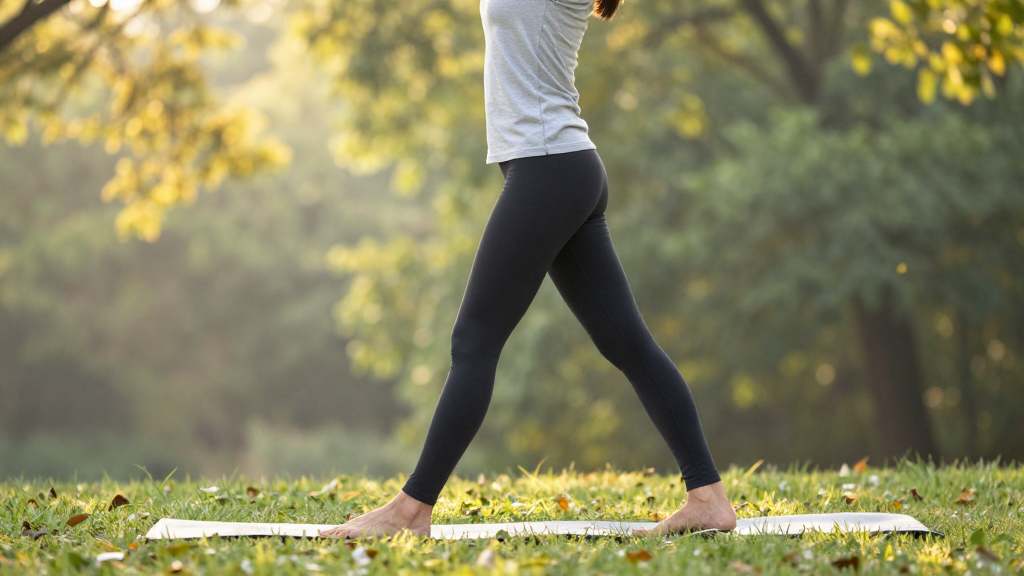
To begin this practice, individuals should adopt a standard mathematical ratio of breath to steps. A common starting point involves inhaling for four steps and exhaling for four steps continuously. Practitioners must focus closely on the transition points between each deliberate inhalation and exhalation. As proficiency increases, individuals can experiment safely with uneven ratios to activate the vagus nerve. For example, combining a four-step inhalation with an eight-step exhalation deepens the relaxation response dramatically. Maintaining a soft gaze on the horizon allows peripheral vision to expand during the rhythm.
The Spiritual and Neurological Impact of Moving Meditation
Walking yoga serves as a vital bridge between the physical body and higher cognitive functions. The rhythmic nature of human steps helps synchronize brain waves into alpha or theta states. This process is called neural oscillation, where biological rhythms align with focused mental awareness. This specific neurological alignment is often where profound creative breakthroughs and epiphanies frequently occur [Source: Scientific American]. Beyond the physical brain, the Zen walking tradition suggests this movement dissolves ego-driven daily distractions. Practitioners are not merely moving through physical space but navigating deeper layers of conscious awareness.
Conclusion
I hope you have enjoyed exploring the intersection of ancient breathwork and modern physical movement. This guide reveals a daily practice that is both technically sophisticated and profoundly simple. By integrating Walking Yoga into your routine, you reclaim the power of basic bodily functions. You can easily use these techniques to serve your highest physical and mental well-being. These core takeaways provide a reliable framework for navigating our increasingly loud, disconnected modern world.
I believe that finding accessible moments of peace is critical for modern human survival. Rhythm, regulation, and resilience are the true foundations of any sustainable functional wellness trend. You do not need an expensive studio membership to achieve a profound state of mindfulness. The most important realization is that your next breath is a powerful tool for transformation. I encourage you to step outside today and experience this moving meditation for yourself.
https://holisticwellnesswave.com/index.php/2026/02/26/the-soft-care-reset-framework/
https://www.ncbi.nlm.nih.gov/
FAQs
Q: Do I need to be an experienced yogi to start Walking Yoga? A: No previous experience is required for this practice. The beauty of this routine is its incredible baseline accessibility for beginners. It builds naturally upon the basic human gait. It introduces foundational breath control that anyone can master quickly. You simply need a willingness to practice consistently.
Q: Is it better to practice Walking Yoga in a city or a natural park? A: Nature provides a significantly more soothing sensory backdrop. However, practicing in a busy urban environment offers unique benefits. It can actually sharpen your intense mindful focus. You learn to maintain your internal rhythm amidst external distractions. Both environments serve as excellent training grounds.
Q: Can Walking Yoga replace my regular cardio workout? A: It serves as an excellent low-impact supplementary exercise. It may not provide the peak intensity of running. However, its metabolic and psychological benefits are truly substantial. It remains a superior tool for long-term health maintenance [Source: American Heart Association]. You should integrate it alongside your current regimen.